
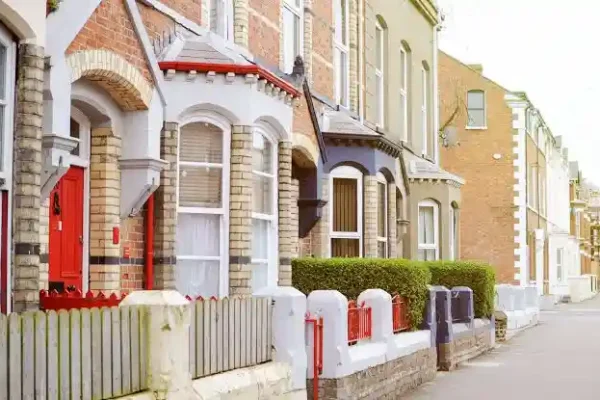
Buying a house is exciting, but it is easy to focus so heavily on the kitchen, garden, number of bedrooms and location that you overlook something less obvious: what has happened around the property before you bought it?
A previous extension, loft conversion, altered chimney breast, boundary change or work carried out close to a neighbouring property may leave behind questions that are worth investigating before you commit to the purchase.
This does not mean every property with building work is a problem. In many cases, there may be nothing to worry about. The important thing is knowing what to check and what questions to ask.
Here are some practical Party Wall and boundary issues to consider when buying a house.
Has the Property Had Building Work Done Before?
Start by looking at what has changed.
Has the property been extended? Has the loft been converted? Has a chimney breast been removed? Has a new structure been built close to the boundary?
These projects can involve neighbouring properties or shared structures, depending on the circumstances.
Ask the seller or conveyancer for information about significant building work carried out at the property. Planning permission and Building Regulations documentation may be relevant, but they are not necessarily the same thing as Party Wall documentation . Also Read: Party Wall Awards Explained Line-by-Line: What Property Owners and Neighbours Need to Know
If work appears relatively recent, it can be useful to establish:
- What work was carried out?
- When was it completed?
- Was a Party Wall Notice served?
- Was a Party Wall Award prepared?
- Was a Schedule of Condition completed?
- Were there any disagreements with neighbouring owners?
You are not necessarily looking for a reason to walk away. You are trying to understand the property’s history before taking ownership.
Check Whether There Are Shared or Party Structures
Some properties have walls, floors or other structures that are shared with a neighbouring property.
This is particularly relevant with:
- Semi-detached houses
- Terraced houses
- Converted properties
- Properties with extensions
- Buildings with shared walls
A wall that looks like an ordinary dividing wall may have a different legal status depending on how it was constructed and how the properties relate to one another.
This can become important if you plan your own alterations later.
For example, you may buy a property thinking:
“I’ll remove this wall and open up the room.”
Only later do you discover that the wall is a party structure or that the proposed work could affect a neighbouring property. Check Out This One: Party Wall Issues for Flat Conversions: A Practical Guide for Property Owners
Knowing the property’s existing condition before you buy allows you to make more realistic plans for future improvements.
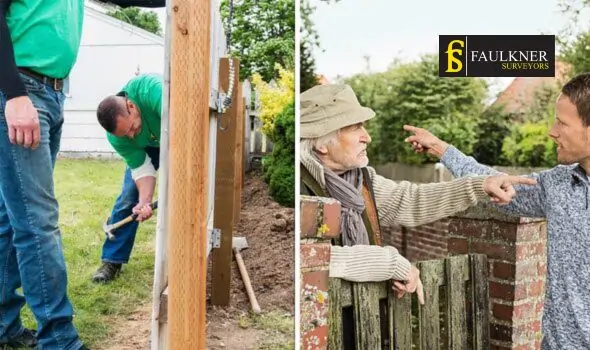
Don’t Assume the Fence Marks the Legal Boundary
A fence is not automatically proof of where the legal boundary sits.
This is one of the easiest assumptions for a buyer to make.
You might look at a garden and think:
“That fence is the boundary.”
But the position of a fence can change over time. It may have been moved, replaced or installed for convenience rather than to establish the exact legal boundary.
If the property’s boundary matters to you, look at the available title information and plans as part of your conveyancing process.
Pay particular attention if:
- The garden appears unusually large or small
- A wall or fence does not seem to follow the property layout
- There is an unusual strip of land alongside the property
- A neighbour’s structure appears to cross or sit very close to the boundary
- The seller mentions a previous boundary disagreement
Where there is genuine uncertainty, it is better to investigate it before completion rather than discovering a problem after you have moved in.

Look at What Your Neighbours Have Built
Don’t only inspect the property you are buying.
Take a look at the surrounding properties too.
Has the neighbour built:
- An extension?
- A conservatory?
- A loft conversion?
- A new garden structure?
- A basement?
- A wall close to the boundary?
You may not need to take action simply because a neighbour has carried out building work. However, previous construction can provide useful context about the relationship between the properties.
It can also matter if you are considering your own building project in the future.
For example, if you are buying a terraced house with plans to extend, the position of neighbouring structures and existing walls may become relevant when your own project is designed.
A few minutes looking carefully at the surrounding properties can raise questions that are worth asking before you buy.
Ask About Previous Party Wall Documentation
If substantial work has been carried out, ask whether there is any Party Wall paperwork available.
Depending on the project, this could include:
- Party Wall Notices
- Statements of Dissent or Consent
- Party Wall Awards
- Agreed Surveyor documentation
- Schedules of Condition
- Records relating to access or construction
Don’t assume that missing paperwork automatically means the property has a defect or that something unlawful has happened. The relevance of the documentation depends on the work, circumstances and applicable requirements.
However, if you are planning to make further alterations yourself, knowing what happened previously can be valuable. See Here: Party Walls and New Builds: What Developers Need to Know Before Construction Starts
Keep copies of relevant documents with your property records if they are provided to you.
They may become useful when you sell the property or when you start planning future works.

Look for Signs of Previous Disputes
Sometimes the physical property gives you clues that there has been a disagreement.
Look for things such as:
- Unusual boundary arrangements
- Walls that have been altered
- Different fencing along neighbouring properties
- Extensions built very close to adjoining buildings
- Visible repairs or historic cracking
- Neighbouring structures that appear unusually close
- References to agreements or disputes in the property paperwork
Again, none of these automatically indicates a problem.
The sensible approach is to ask questions rather than make assumptions.
If a seller tells you that a dispute occurred years ago, find out what it concerned and whether it was resolved.
A resolved disagreement is very different from an unresolved one.
Think About What You Want to Do With the Property
This is perhaps the most useful question to ask before buying:
“What do I want to change after I move in?”
If your plans include an extension, loft conversion, removing a chimney breast, basement work or other structural alterations, investigate the implications before you buy.
A property that works perfectly for your current needs may require additional planning and Party Wall considerations if you intend to alter it. Also Check This: Schedule of Condition: What It Is and Why It Protects Both Neighbours
You don’t necessarily need every detail worked out before exchange. But understanding potential constraints can prevent unpleasant surprises later.
For larger projects, consider discussing the proposed works with the appropriate professionals at an early stage.
The earlier potential Party Wall or boundary issues are identified, the easier it can be to factor them into your project planning.
Buying a House Means Looking Beyond the House
A property isn’t just the four walls you see during a viewing.
The history of those walls, the relationship with neighbouring properties and the position of the boundaries can all matter.
You don’t need to become an expert in the Party Wall etc. Act 1996 before buying a home. But if a property has had significant building work, has unusual boundaries or you already have plans for further alterations, it is worth asking the right questions early.
A little investigation before completion can be far easier than trying to untangle a boundary or Party Wall issue after you have moved in.
If you’re buying a property and want to understand how previous or proposed building work may affect neighbouring structures or Party Wall matters, Faulkner Surveyors can discuss the circumstances with you and explain where a Party Wall surveyor may be appropriate.

Frequently Asked Questions
Q: I have bought a house and discovered that the previous owner carried out an extension. What should I do?
First, establish what work was carried out and when. Check the property paperwork and ask your conveyancer about any available planning, Building Regulations and Party Wall documentation.
If you are concerned about the construction itself or are planning further work, a suitably qualified professional can help you understand the position.
Q: The garden fence does not appear to match the title plan. Which one is correct?
Don’t assume either one is automatically definitive based solely on appearance.
Property boundaries can be more complicated than the position of a fence suggests. Raise the discrepancy with your conveyancer and, where necessary, obtain appropriate professional advice before treating the fence as evidence of the legal boundary.
Q: I want to extend the house after buying it. Should I check Party Wall matters before completing the purchase?
If the planned extension is an important reason for buying the property, it makes sense to investigate potential constraints as early as possible.
Architectural design, structural requirements, planning matters, excavation and Party Wall procedures can all affect how a project is approached.
Understanding these issues before committing to the purchase can help you make a more informed decision about whether the property suits your plans.
Q: The previous owner cannot find the Party Wall Award . Does that mean the extension was carried out incorrectly?
Not necessarily.
The absence of a document does not, by itself, establish what happened or whether the relevant procedures were followed. The circumstances of the original work need to be established.
Your conveyancer and, where appropriate, a Party Wall professional can help determine what information is available and what further investigation may be appropriate.
Q: My new neighbour has an extension that appears to cross the boundary. Can I ask them to move it?
Visual assumptions are not enough to determine a property boundary. Take time to verify the boundary position and establish the history of the structure. If there is any uncertainty, professional guidance can help you understand the situation before making a formal complaint.
Q: I am buying a terraced house. Should I be concerned about the party wall ?
A party wall is not, by itself, a reason for concern. Shared structures are common in terraced and semi-detached properties.
The important point is understanding the arrangement and considering it if you intend to carry out future building work.
For Further Information, Please Call Us Today: 03300100262