
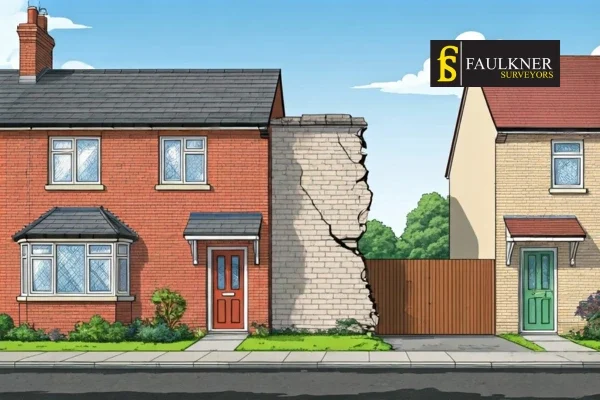
A lot of homeowners start building work without knowing a Party Wall Notice is something they legally need. Often, it is only when a neighbour questions the work that they realise there could be a problem — by which point the project may already be facing delays, disputes, and unexpected costs.
Under the Party Wall etc. Act 1996, certain construction work affecting shared walls, boundaries, or nearby foundations requires formal notice to be served before work begins. While failing to serve notice is not a criminal offence, it is still considered a breach of statutory duty — and that can create serious problems once construction starts.
Why the Party Wall Process Matters
The Party Wall etc. Act 1996 is designed to maintain fairness in situations when potential building work may impact on a party wall or neighbouring property. It allows both neighbours to appraise the plans prior to work occurring, thus helping to mitigate future disputes, confusion or damage.
A Party Wall Agreement will normally include:
- Details of the proposed building work
- Arrangements for access if needed
- Expected construction timescales
- Steps are being taken to protect neighbouring property.
- How any damage or disputes would be handled
When these details are agreed properly from the start, it is usually much easier to avoid misunderstandings and keep the project running smoothly.
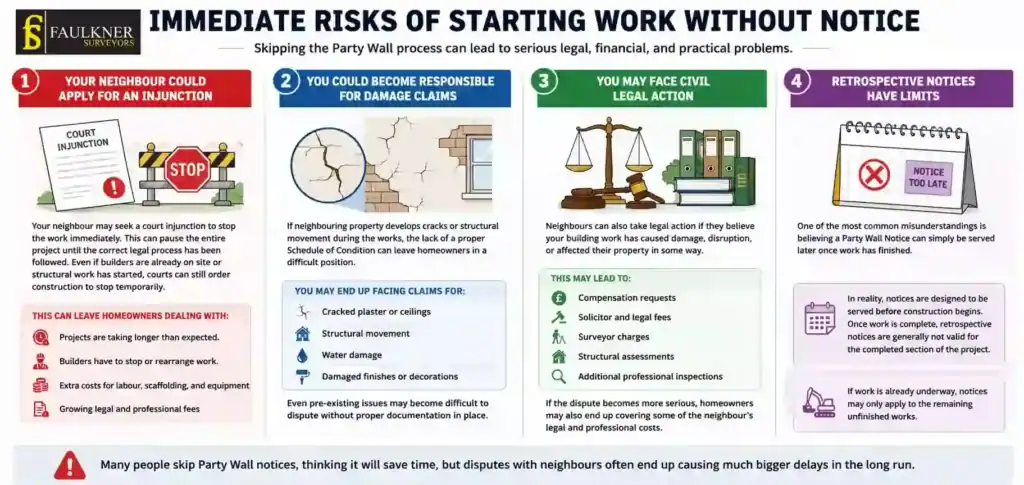
Immediate Risks of Starting Work Without Notice
1. Your Neighbour Could Apply for an Injunction
One of the biggest risks is that your neighbour may seek a court injunction to stop the work immediately.
That can put the entire project on hold until due process is followed. Courts can also stop construction on a temporary basis, even though the builders are already on site or structural work has commenced.
This can leave homeowners dealing with:
- Projects are taking longer than expected.
- Builders have to stop or rearrange work.
- Extra costs for labour, scaffolding, and equipment
- Growing legal and professional fees
Many people skip Party Wall notices , thinking it will save time, but disputes with neighbours often end up causing much bigger delays in the long run.
3. You May Face Civil Legal Action
Neighbours can also take legal action if they believe your building work has caused damage, disruption, or affected their property in some way.
This may lead to:
- Compensation requests
- Solicitor and legal fees
- Surveyor charges
- Structural assessments
- Additional professional inspections
If the dispute becomes more serious, homeowners may also end up covering some of the neighbour’s legal and professional costs.
2. You Could Become Responsible for Damage Claims
If neighbouring property develops cracks or structural movement during the works, the lack of a proper Schedule of Condition can leave homeowners in a difficult position.
A Schedule of Condition records the neighbouring property’s condition before work starts. Without it, proving whether damage already existed becomes much harder.
As a result, homeowners may end up facing claims for:
- Cracked plaster or ceilings
- Structural movement
- Water damage
- Damaged finishes or decorations
Even pre-existing issues may become difficult to dispute without proper documentation in place.
4. Retrospective Notices Have Limits
One of the most common misunderstandings is believing a Party Wall Notice can simply be served later once work has finished.
In reality, notices are designed to be served before construction begins. Once work is complete, retrospective notices are generally not valid for the completed section of the project.
If work is already underway, notices may only apply to the remaining unfinished works.
What Should You Do If Work Has Already Started?
Pause the Relevant Work
If the proper notice was not served, pausing any notifiable structural work is usually the safest option. Carrying on while disagreements are building can increase the chances of legal problems and make court injunctions far more likely.
Speak to a Party Wall Surveyor
An experienced surveyor can advise you on:
- Whether the Act applies to your project
- Which parts of the work require notice
- Ways to minimise further legal issues
- Whether an agreement can still be reached
Getting professional advice early can often help avoid much bigger and more expensive problems later on.
Communicate With Your Neighbour
Open communication is important. In many situations, neighbours mainly want reassurance that:
- Their property will be protected.
- Damage will be repaired if it occurs.
- The work is being handled properly.
If the adjoining owner agrees after receiving notice, work may continue with written consent. If they dissent, surveyors can be appointed to prepare a formal Party Wall Award.

Can a Party Wall Surveyor Help?
Yes. An experienced Party Wall Surveyor can provide legal guidance to homeowners, prepare notices, and assist with disputes before they become an issue.
Many homeowners use regulated professionals through organisations such as the Faulkner Surveyors to ensure the process is handled correctly.
Final Thoughts
Starting work without a Party Wall Notice might not seem like a big problem at first, but it can quickly lead to neighbour disputes, court injunctions, legal claims, and costly project delays. Without the protection of the Party Wall Act, homeowners can easily find themselves facing financial and legal problems if issues come up during the building work.
Taking professional advice before structural work begins is usually far simpler — and far cheaper — than trying to resolve disputes after the project is already underway.
FAQs
Q: What should I do if I have already started my loft conversion or extension work without serving a Party Wall Notice ?
If work has already begun, it’s best to stop any major structural work and speak with a Party Wall Surveyor straight away. You should also speak to your neighbour properly and try to sort things out early before the situation turns into a legal dispute or causes delays.
Q: Can my neighbour legally stop my building work if I forgot to serve a Party Wall Notice before construction began?
Yes. Your neighbour can ask the court to stop the work until the proper Party Wall procedure has been completed. This may cause project delays, added costs, and potential legal fees.
Q: Am I automatically responsible for cracks or damage to my neighbour’s property if there was no Schedule of Condition completed before work started?
Without a Schedule of Condition, it becomes harder to prove whether damage already existed before the works began. This can leave homeowners in a weaker position if neighbours later make damage claims.
Q: Can I still serve a Party Wall Notice after construction work has already been completed?
Party Wall Notices are meant to be served before work starts. If work is already completed, retrospective notices usually cannot fully correct the issue, although notices may still apply to unfinished parts of the project.
Q: What types of building projects usually require a Party Wall Notice , even if the work is only being carried out on my own property?
Projects such as loft conversions, extensions, basement excavations, chimney breast removals, and structural work near shared walls or neighbouring foundations often require a Party Wall Notice .
Q: Will failing to follow the Party Wall Act affect my relationship with neighbours or cause future property problems?
Yes, disputes over building work can damage neighbour relationships and sometimes lead to ongoing legal or property issues. Following the correct process early usually helps avoid unnecessary conflict.
For Further Information, Please Call Us Today 03300100262