
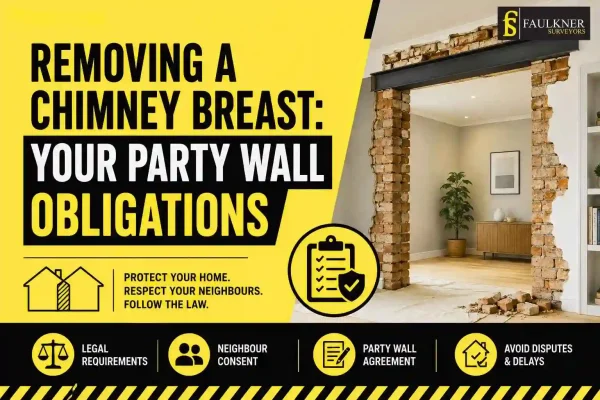
Removing a chimney breast can create extra space and make a room feel less cramped. It is a popular improvement in older terraced and semi-detached homes across the UK, particularly where fireplaces are no longer needed.
But before the work begins, there is an important question to answer: does removing your chimney breast affect a party wall?
In many properties, the answer can be yes. If the chimney breast is built into or attached to a shared wall, removing it may fall within the Party Wall etc. Act 1996. Understanding your obligations before work starts can help prevent disputes, delays and expensive problems with your neighbour.
Do I Need a Party Wall Agreement to Remove a Chimney Breast?
One of the first questions homeowners ask is whether they need a party wall agreement before removing a chimney breast.
There is no single answer for every property. It depends on how the chimney breast is constructed, where it sits and how the proposed removal affects the party wall.
In many older terraced and semi-detached properties, chimney breasts are built into party walls. Removing one can therefore involve cutting into, altering or affecting a wall shared with the adjoining property.
The Party Wall etc. Act 1996 can apply to certain types of work affecting party walls and structures. If your proposed work falls within the Act, you must generally serve the correct notice on the adjoining owner before work begins. Party Wall Issues for Flat Conversions: A Practical Guide for Property Owners
It is important not to assume that because the chimney breast is inside your property, you can remove it without considering your neighbour’s rights.
The safest approach is to establish the position before instructing builders to start.
Starting the work before checking your obligations can lead to avoidable problems, especially if your neighbour later believes the work has caused damage or affected the stability of their property.

Is My Chimney Breast Part of the Party Wall?
This is another common source of confusion.
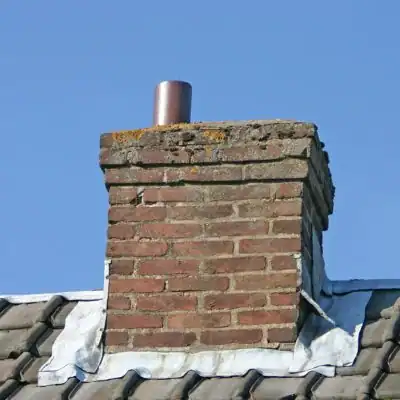
A chimney breast is the section of masonry that projects into a room around a fireplace. The chimney stack is the visible section above the roof, while the flue is the passage through which smoke and gases historically travelled.
In a terraced or semi-detached house, your chimney may be connected to a shared chimney structure or built into the party wall. However, properties differ considerably, particularly in older housing.
You should establish:
- Whether the wall is a party wall
- Whether the chimney breast is built into that wall
- Whether the chimney is shared with your neighbour
- Whether your neighbour still has a functioning flue
- Whether removing the breast could affect supporting masonry.
- What will happen to any chimney stack above
This is particularly important where you only intend to remove the chimney breast on one floor.
For example, removing a chimney breast from a ground-floor room while leaving masonry above can require suitable structural support. The work should not simply be treated as removing an unnecessary piece of brickwork. Party Walls and New Builds: What Developers Need to Know Before Construction Starts
A professional assessment before construction begins can identify potential issues and help you understand whether the Party Wall etc. Act 1996 is relevant.
What Happens If My Neighbour Objects to Chimney Breast Removal?
Many homeowners worry that a neighbour can say “no” and prevent them from improving their property.
The situation is more nuanced.
Suppose your work is covered by the Party Wall etc. Act 1996, your neighbour has certain rights and protections. They may raise concerns about the proposed work, particularly if they believe it could cause damage to their property.
Their concerns might include:
- Cracking to the party wall
- Damage to plaster or decoration
- Movement of the remaining chimney
- Structural instability
- Problems with their chimney or flue
- Noise and disruption
- Access requirements
The purpose of the Party Wall process is not simply to prevent building work. It provides a formal framework for dealing with work that could affect adjoining owners.
If a dispute arises, the appropriate surveyor arrangements can help resolve the matter and establish the necessary protections. Schedule of Condition: What It Is and Why It Protects Both Neighbours
Trying to pressure a neighbour into accepting the work, or proceeding without addressing their concerns, can make matters considerably worse.
A properly managed process gives everyone a clearer understanding of what is proposed and how the adjoining property will be protected.
Will Removing a Chimney Breast Damage My Neighbour’s Property?
This is one of the biggest concerns surrounding chimney breast removal.
The risk is not necessarily the removal itself, but how it is carried out.
Poorly planned work could result in cracking, movement or damage to the adjoining property. This is why structural considerations should be addressed before demolition begins.
The remaining chimney structure must also be considered. If a chimney breast is removed at a lower level while masonry remains above, you may need appropriate structural support.
A structural engineer may need to design or specify suitable support depending on the circumstances.
A party wall surveyor has a different role. Their job is concerned with the Party Wall process, including protecting the interests of the building owner and adjoining owner where the Act applies.
A schedule of condition may also be appropriate. This records the condition of relevant parts of the adjoining property before work begins.
Why does this matter?
If a neighbour later claims that a crack appeared because of your chimney removal, having an accurate record of the property’s previous condition can be extremely useful.
It provides a clearer basis for determining whether the alleged damage was pre-existing or potentially related to the building work.
Do I Need a Party Wall Notice Before Removing My Chimney Breast?
If your proposed works fall within the Party Wall etc. Act 1996, you may need to serve the appropriate notice on your adjoining owner before work begins.
A Party Wall Notice is not simply a courtesy letter. It forms part of the statutory process and should contain the relevant information required for the proposed work.
The timing is also important.
Homeowners sometimes contact a builder, agree a start date and only afterwards discover that party wall matters need to be addressed. This can delay the planned building work.
It is therefore sensible to consider party wall requirements before finalising your construction timetable.
Depending on the circumstances, the adjoining owner may consent to the proposed works, or the matter may need to proceed through the surveyor process. How Do Construction Methods Affect Party Wall Requirements? A Homeowner’s Guide
Where surveyors are involved, they may prepare a Party Wall Award setting out matters such as the rights and responsibilities of the parties and the conditions under which the work can proceed.
The exact requirements depend on the proposed work and the property’s circumstances, so you should seek professional advice rather than rely on assumptions.

How Much Does a Party Wall Surveyor Cost for Chimney Breast Removal?
Cost is naturally an important consideration for anyone planning home improvements.
There is no fixed price for every chimney breast removal project because the amount of work required can vary considerably.
Factors that can affect the cost include:
- The complexity of the proposed work
- Whether the adjoining owner consents
- Whether one or multiple surveyors are required
- Whether a schedule of condition is needed
- Whether a Party Wall Award is required
- The level of communication and negotiation involved
- Whether additional issues arise during the process
In some situations, the owners may agree to use an Agreed Surveyor rather than appointing separate surveyors.
Where a dispute exists, separate surveyors may be appointed for each owner.
Responsibility for costs depends on the circumstances and the nature of the works. In many cases, the building owner carrying out the work will be responsible for the reasonable costs associated with the adjoining owner’s surveyor where those costs arise under the Act. Do I Need a Party Wall Agreement for a Basement or Cellar Conversion?
Remember that the cheapest option is not always the least expensive overall.
Failing to deal with party wall matters properly could lead to delays, disputes or claims that are considerably more costly than obtaining professional advice at the beginning.
How Can Faulkner Surveyors Help With Chimney Breast Removal?
At Faulkner Surveyors , we understand that chimney breast removal can seem like a straightforward alteration until party wall and structural considerations come into play.
Our role is to help homeowners understand the Party Wall process and deal with the relevant requirements professionally.
Depending on your circumstances, this may include helping with:
- Assessing the party wall implications of your proposed work
- Advising on the appropriate Party Wall procedure
- Serving the relevant notices
- Preparing a schedule of condition where appropriate
- Acting as an Agreed Surveyor
- Acting for an individual owner where separate surveyors are required
- Preparing a Party Wall Award where necessary
- Addressing concerns raised by adjoining owners
- Helping reduce the risk of avoidable disputes and delays
We aim to make the process as straightforward as possible while ensuring the appropriate protections are in place.
If you are planning to remove a chimney breast, it is better to deal with party wall matters before the builders arrive than to try to resolve problems after work has started.

Common Questions About Chimney Breast Removal and Party Walls
Q: Can I remove my chimney breast without telling my neighbour?
If the proposed work falls within the Party Wall etc. Act 1996, you may have legal obligations to notify your adjoining owner before work begins. It is important to establish this before starting.
Q: My neighbour doesn’t agree with the chimney removal — what happens now?
It is understandable for a neighbour to have questions or concerns about work affecting a shared wall. However, their objection does not automatically bring your plans to an end. The Party Wall process provides a framework for dealing with disagreements and protecting both sides.
Q: Do I need a structural engineer as well as a party wall surveyor?
They perform different roles. A structural engineer can deal with the structural design and support required, while a party wall surveyor deals with the relevant Party Wall procedure and associated matters.
Q: Who Is Responsible for Paying the Party Wall Surveyor’s Fees?
This depends on the circumstances. Where the work is for the building owner’s benefit and falls within the Act, the building owner will commonly be responsible for reasonable party wall costs arising from the adjoining owner’s involvement.
Q: What if I have already removed the chimney breast without serving notice?
Don’t ignore the situation if the work should have been dealt with under the Party Wall etc. Act 1996, professional advice can help determine what steps may be appropriate.
Q: How long does the Party Wall process take?
The timescale depends on the circumstances, the type of work and whether the adjoining owner agrees or a dispute arises. Planning party wall matters early can help prevent unnecessary delays to your building project.
For Further Information, Please Call Us Today: 03300100262