
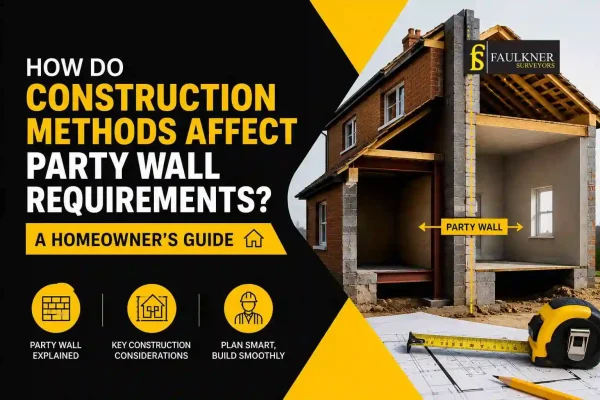
Whether you’re building an extension, converting your loft, or digging new foundations, some projects require more than planning permission. If your work affects a neighbouring property, you may also need to comply with the Party Wall Act .
Many homeowners don’t realise their building project may involve Party Wall requirements until work is about to begin. When you know what’s required from the outset, it’s much easier to plan your project with confidence and minimise the chances of delays, unexpected expenses or disputes along the way.
Whether you’re planning a loft conversion, basement or extension, this guide explains the key Party Wall considerations and how surveyors help keep your project running smoothly.
What Are the 3-Metre and 6-Metre Rules, and Why Do They Matter?
One of the most misunderstood parts of the Party Wall Act is the so-called 3-metre and 6-metre rules. These aren’t arbitrary distances—they exist to protect neighbouring properties when excavation work could affect their structural stability.
The 3-metre rule usually applies if you’re planning to dig within three metres of your neighbour’s property and your foundations will be deeper than theirs. In this situation, the excavation could affect the stability of the neighbouring building, which is why Party Wall procedures may be required. Digging deeper can undermine the surrounding ground, increasing the risk of movement or settlement. The Complete Guide to Section 6 Excavation Notices
The 6-metre rule applies to deeper excavations, particularly where foundations are supported by a 45-degree line drawn from the neighbouring foundations. Large basement projects often fall into this category.
For example, if you’re building a rear extension with deeper foundations than your neighbour’s property, you may need to serve a Party Wall Notice even if you’re entirely within your own boundary.
These rules aren’t designed to prevent development—they simply ensure that neighbouring buildings remain protected while construction takes place.
Understanding these distances early allows surveyors to assess the potential risks before work begins, helping to avoid unnecessary disputes later in the project.
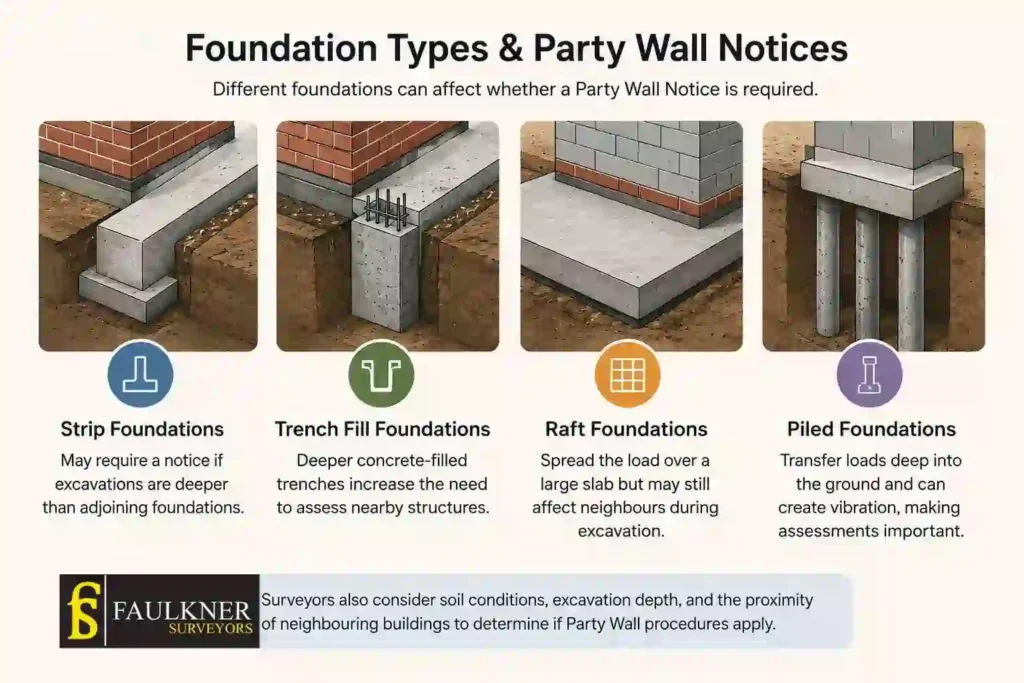
How Do Different Foundation Types Influence Party Wall Notices?
The type of foundation used for your project can affect whether a Party Wall Notice is required. Surveyors assess the foundation design to determine if the excavation could impact neighbouring properties.
- Strip Foundations – Common for house extensions and may require a notice if excavations are deeper than adjoining foundations.
- Trench Fill Foundations – Require deeper concrete-filled trenches, increasing the need to assess nearby structures.
- Raft Foundations – Spread the building’s load over a large slab but may still affect neighbouring properties during excavation.
- Piled Foundations – Transfer loads deep into the ground and can create vibration, making Party Wall assessments especially important.
Alongside the foundation type, surveyors also consider soil conditions, excavation depth, and the proximity of neighbouring buildings to decide whether Party Wall procedures apply.
Why Are Structural Steel Beams in Loft Conversions a Party Wall Concern?
Loft conversions have become one of the UK’s most popular home improvements, but many homeowners don’t realise that installing structural steel beams often affects Party Wall requirements.
Most loft conversions require Rolled Steel Joists (RSJs) to support the new floor and roof structure. In many properties, these beams are inserted into the existing party wall by creating beam pockets. Understanding Party Wall Survey Costs: A Comprehensive Guide
Although the work may seem relatively straightforward, cutting into a shared wall changes how structural loads are transferred through the building. That means neighbouring properties can potentially be affected during installation.
A Party Wall surveyor will assess whether the proposed works are likely to impact the adjoining owner and, where necessary, prepare a Party Wall Award setting out how the work should be carried out safely.
This process often includes:
- protecting the neighbouring property during construction
- Recording the existing condition of the walls
- agreeing on suitable working methods
- reducing the risk of future disputes over cracking or damage
Far from creating unnecessary paperwork, these procedures provide reassurance for both homeowners and neighbours while allowing loft conversion projects to proceed with confidence.
How Can Basement Conversions Affect Neighbouring Properties?
Basement conversions involve some of the most technically demanding construction work carried out on residential properties.
Unlike extensions built above ground, basement projects require significant excavation below existing foundations. Removing soil changes how loads are distributed beneath nearby buildings, making careful planning essential.
Potential risks include:
- ground settlement
- movement of adjoining structures
- temporary loss of support
- water ingress
- vibration during excavation
For these reasons, basement works often require extensive structural calculations, setups with temporary supports and some level of supervision throughout construction.
Professional surveyors work alongside structural engineers to review excavation methods, underpinning proposals, and the sequencing of works. Their role is to ensure neighbouring properties remain protected while allowing the project to progress safely. 5 Tips for Navigating Retaining Wall Disputes
If you do not plan carefully, a basement conversion could turn out to be much more complicated than you intended. Delays and extra costs can occur due to unanticipated soil conditions, structural issues or disagreements with neighbours. By involving experienced professionals early, you can identify potential issues and mitigate them before they become more complex, costly problems.
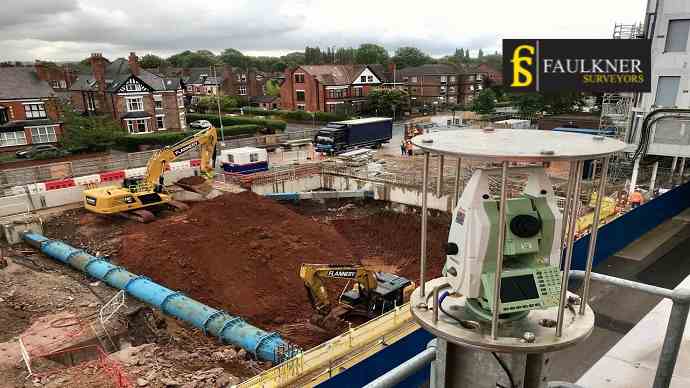
Why Is Movement Monitoring Used During Construction Projects?
When construction takes place close to neighbouring properties, it’s natural for homeowners to worry about cracks or structural movement. Movement monitoring helps surveyors and engineers assess whether nearby buildings are affected during work.
Depending on the project, monitoring may include:
- Crack gauges to track existing cracks.
- Settlement markers to measure ground or building movement.
- Tilt sensors to detect changes in a building’s position.
- Electronic monitoring systems for continuous measurements on larger projects.
Readings are taken before work begins and monitored throughout the construction process. If everything remains within safe limits, it provides reassurance that the building is stable. If unexpected movement is detected, engineers can investigate quickly and make changes before the issue becomes more serious.
By providing clear, factual evidence, movement monitoring helps protect homeowners, neighbours and contractors while reducing the risk of disputes. Can I Alter The Party Wall Surveyor? – A Crucial Guide From Faulkner Surveyors
What Role Do Structural Calculations Play in Party Wall Awards?
A Party Wall Award is far more than a legal document—it relies heavily on sound engineering principles.
Structural calculations demonstrate that the proposed alterations have been properly designed and can safely support the building once construction is complete.
For example, calculations may confirm:
- The size of structural steel beams
- foundation dimensions
- loading on existing walls
- temporary support requirements
- stability during construction
Surveyors review these calculations when preparing Party Wall Awards to ensure the proposed works are practical and minimise risks to adjoining owners.
Where calculations identify additional support or revised construction methods, these recommendations can be incorporated into the Award before work starts.
This collaborative approach between surveyors, engineers and builders significantly reduces the likelihood of unexpected structural problems during construction.
What Should You Know Before Building Over or Adjacent to Sewers?
Many homeowners are surprised to discover that public sewers can influence both construction design and Party Wall procedures.
If your extension or new foundations are built over or close to a public sewer, your local water authority may require a Build Over Agreement before work can begin.
The location of underground drainage can affect:
- foundation depth
- excavation methods
- structural design
- construction sequencing
Where deeper excavations are required to avoid or protect sewer infrastructure, Party Wall requirements may also become relevant if neighbouring foundations are at risk.
Checking drainage plans early in the design process can prevent unexpected delays later and allows architects, engineers and surveyors to coordinate their designs more effectively.
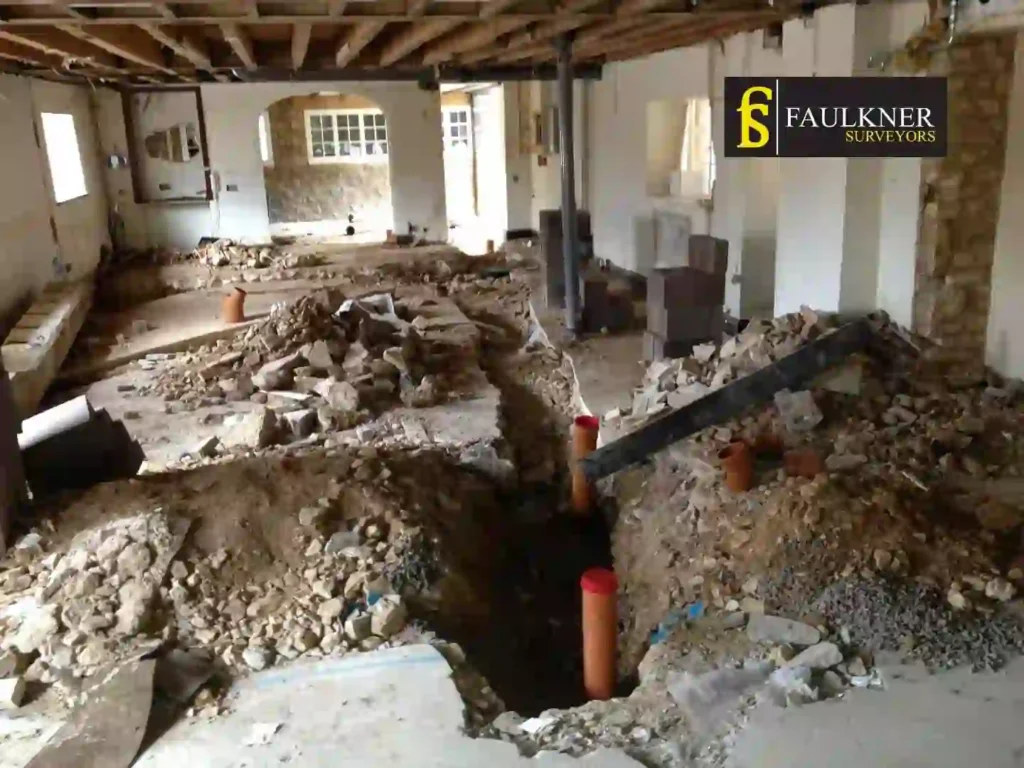
How Do Surveyors Assess Vibration Risk During Construction?
Not all construction projects generate significant vibration, but activities such as piling, demolition, heavy excavation and concrete breaking can affect nearby buildings.
Surveyors assess vibration risk by considering several factors, including:
- the distance between properties
- ground conditions
- construction techniques
- building age
- structural condition of neighbouring properties
Where higher risks are identified, specialist vibration monitoring equipment may be installed throughout construction.
If vibration levels approach acceptable limits, contractors can modify working methods, reduce equipment intensity or change construction sequencing to minimise any impact. Party Wall Vs Boundary Wall: The Law, The Rights, and Your Options
This proactive approach helps protect neighbouring buildings while keeping projects moving safely and efficiently.
Rather than waiting to see if problems develop later, vibration assessments allow potential risks to be monitored from day one, giving homeowners and neighbours extra peace of mind.

Frequently Asked Questions
Q: Do I always need a Party Wall Notice if I’m excavating near my neighbour’s property?
Not necessarily. In the case of how deep an excavation will be, how close a building is to the neighbouring plot, and what type of foundation requires a notice, it all comes down to whether the builder should serve a notice. Before commencing work, a Party Wall surveyor can review your plans and determine if the legal criteria apply.
Q: Can my neighbour stop my loft conversion because steel beams will be installed in the party wall ?
In most cases, no. Your neighbour cannot simply prevent lawful work covered by the Party Wall Act. However, they have the right to be properly notified, and surveyors may prepare a Party Wall Award that sets out how the work should be carried out safely while protecting both properties.
Q: Why are structural calculations important for Party Wall matters ?
Structural calculations confirm that the proposed design is safe and capable of supporting the building throughout construction and after completion. They also help Party Wall surveyors understand how the work will affect adjoining structures, allowing them to prepare appropriate safeguards within the Party Wall Award.
Q: What happens if construction causes movement or cracks in a neighbouring property ?
Before work begins, surveyors often prepare a Schedule of Condition to record the property’s existing state. On higher-risk projects, movement monitoring may also be used. If genuine damage occurs as a result of the works, the Party Wall process provides a framework for assessing the issue and arranging appropriate repairs.
Q: Does building over a sewer automatically require a Party Wall Agreement
No. Building over a public sewer usually requires approval from the relevant water authority through a Build Over Agreement. However, if the associated excavation or foundation work also affects neighbouring structures, Party Wall procedures may apply as well. These are separate requirements that sometimes overlap.
Q: When should I contact a Party Wall surveyor during my project?
The earlier, the better. Speaking to a surveyor while your plans are still being developed allows potential issues to be identified before construction starts. Early advice can help avoid delays, ensure notices are served on time, and reduce the risk of disputes with neighbouring property owners.
For Further Information, Please Call Us Today 03300100262